If x ≠ y, then (x, y) ≠ (y, x); and (x, y) = (y, x) if and only if x = y. Is this claim true? Class 9
R
RBSEGuide
If x ≠ y, then (x, y) ≠ (y, x); and (x, y) = (y, x) if and only if x = y. Is this claim true? Class 9
Question 1.
If x ≠ y, then (x, y) ≠ (y, x); and (x, y) = (y, x) if and only if x = y. Is this claim true? Class 9
Answer:
Yes, the claim is true.
If x ≠ y
For example, let x = 2 and y = 3, then
(x, y) = (2, 3) and (y, x) = (3, 2)
∴ (x, y) ≠ (y, x)
If x = y
For example, let x = y = 4, then
(x, y) = (4, 4) and (y, x) = (4, 4)
∴ (x, y) = (y, x)
Question 2.
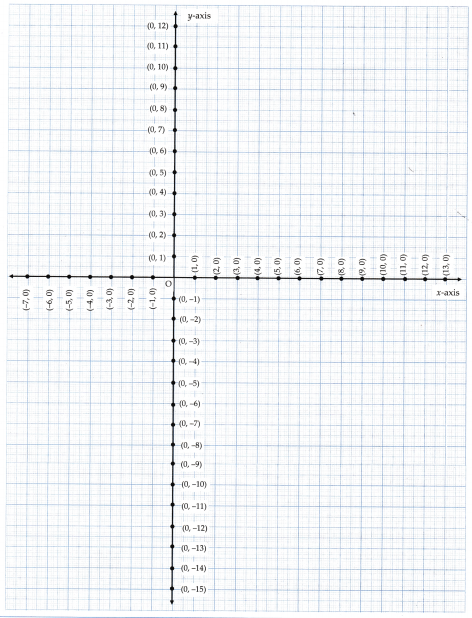
On a graph sheet, mark the x-axis and y-axis and the origin O. Mark points from (-7, 0) to (13, 0) on the x-axis and from (0, -15) to (0,12) on the y-axis. (Use the scale 1 cm = 1 unit.) Class 9
Solution: