Activity 11.1 Let us explore to study and observe the methods of vegetative propagation. Class 9
R
RBSEGuide
Activity 11.1 Let us explore to study and observe the methods of vegetative propagation. Class 9
Activity 11.1 Let us explore
Aim: To study and observe the methods of vegetative propagation.
Observation: The techniques of cutting, layering and grafting followed are:
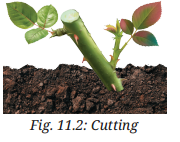
(a) Cutting: In this type of propagation any part of the plant—root, stem or leaf is cut and buried partly in the moist soil. Many plants like rose plant, Chrysanthemum, grapes are propagated by means of cutting.
(b) Layering
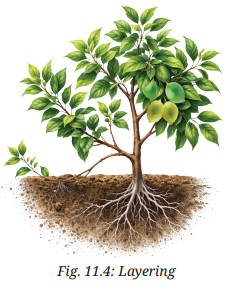
- Select a flexible, thin twig of a plant (e.g., lemon, jasmine).
- Bend the middle part of the twig and bury it under the soil surface.
- Water regularly — new roots develop at the buried part after 10-15 days.
- Once roots develop, cut the twig from the parent plant.
- The rooted twig now grows as a new independent plant!
(c) Grafting
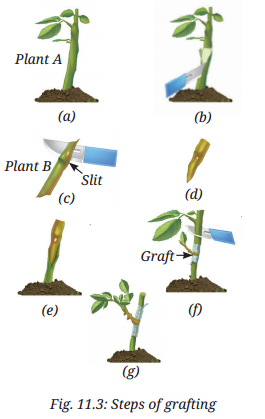
- Take a healthy rooted plant (Plant A = rootstock, e.g., wild rose).
- Take a stem piece from another plant (Plant B = scion, e.g., yellow rose).
- Create a slit/wound on Plant A’s twig.
- Insert Plant B’s stem cutting into Plant A’s slit and tie with cloth/tape.
- Cut the other branches of Plant A so Plant B gets all nutrients.
- Water regularly — Plant B grows on Plant A’s roots.
Conclusion:
- Produces genetically identical plants — desirable characters are preserved.
- Plants grow faster than those from seeds — begin flowering/fruiting sooner.
- Farmers can produce plants on a large scale efficiently.
- Useful for plants that produce few or sterile seeds (e.g., banana, seedless grapes)