Activity 2.3 Let us investigate, To prepare and observe temporary slides of plant cells. Class 9
Activity 2.3 Let us investigate, To prepare and observe temporary slides of plant cells. Class 9
Activity 2.3 Let us investigate
Aim: To prepare and observe temporary slides of plant cells (onion/Rhoeo leaf) and human cheek cells, compare their structures and study the effect of a concentrated sugar solution on them.
Material Required: Onion or Rhoeo peel, coverslip, safranin, toothpick, cotton, glass slide, methylene blue, microscope.
Procedure:
A. Onion peel
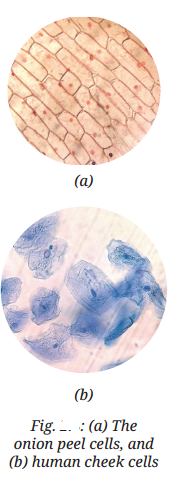
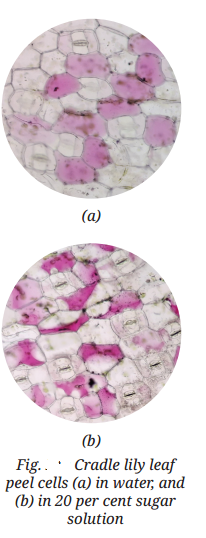
- Prepare temporary slides of a thin peel of an onion leaf or a Rhoeo (Cradle lily) leaf.
- Mount it with safranin using cover slip to observe it plant cells under microscope.
B. Human Cheek Cells
- Prepare a temporary slide of cheek cells by gently scraping the inner side of your cheek with a cotton swab or the blunt end of a toothpick.
- Spread the cheek cells on a clean glass slide.
- Add a drop of water followed by a few drops of methylene blue stain and carefully place a coverslip.
- Observe both the slides under microscope.
Observations: Onion peel cells / Rhoeo leaf peel cells are box-shaped and regularly arranged. Cheek cells are irregularly arranged.
After placing in 20 per cent sugar solution:
- In plant cells, the cytoplasm shrinks away from the cell wall (plasmolysis) and the cell becomes flaccid.
- In human cheek cells, the cell shrinks due to water loss (exosmosis) and becomes distorted
Conclusion:
Plant cells and animal cells differ in structure mainly due to the presence of a cell wall in plant cells. Both types of cells lose water when placed in a concentrated sugar solution due to osmosis, but plant cells show plasmolysis because of the rigid cell wall, while animal cells simply shrink and get distorted.