Electricity Circuits and Their Components Class 7 Notes
hardElectricity Circuits and Their Components Class 7 Notes
Electricity Circuits and Their Components Class 7 Notes
- Hydroelectric power: A form of energy which uses the natural flow of moving water to generate electricity.
- Windmills: A machine that converts the power of wind to generate electrical energy.
- Solar panels: A device that converts sunlight into electricity.
- Terminals: A point of connection for closing an electric circuit.
- Portable: Capable of being carried or moved about.
- Glow: Give out steady light without flame.
- Electric cell: A portable source of electrical energy.
- Battery: A combination of two or more electric cells.
- Incandescent lamp: A type of electric light that produces light by heating a filament until it glows.
- LED: Light Emitting Diode
- Prediction: What someone thinks will happen.
- Electrical circuit: A complete path for electric current to flow.
- IEC: International Electrotechnical Commission.
- IEEE: Institute of Electrical and Electronics Engineers.
- Momentarily: For a very short time.
- Electric switch: A device that either completes or breaks an electric circuit.
- Good conductors: Materials through which electric current can flow easily.
- Insulators: Materials through which current cannot pass through are called insulators or poor conductors.
- Ceramics: Pots and other articles made from clay hardened by heat.
- Equipment: Necessary items for a particular purpose.
- Direct Current (DC): Electricity from cells or batteries.
- Alternating Current (AC): Electricity from power plants.
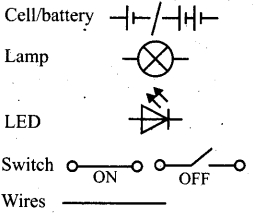
- Circuit diagram: Representation of an electrical circuit using symbols.
→ Sources of Electricity
Hydroelectric Power (falling water)
Windmills (wind energy)
Solar Panels (sunlight)
Natural gas or coal (thermal plants)
Portable sources: Electric cell, Battery
→ Electric Cell

Portable source of electricity
Has two terminals:
Positive (+) → metal cap
Negative (-) → flat metal disc
Used in: Torchlights, Wall clocks, Radios, Remotes
→ Battery

Combination of two or more electric cells
Connected: Positive terminal of one cell → Negative terminal of next
Provides: Higher voltage, Longer duration of energy
→ Electric Circuits
Path for current to flow Components
Electric cell or battery Connecting wires
Electric lamp (or LED) Switch
Circuit types
Closed circuit → current flows → lamp glows
Open circuit → no current → lamp off
→ Electric Lamps Incandescent Lamp
Thin wire inside → filament
Filament glows when current flows
Terminals:
Two thicker wires connected separately to base and tip
Filament can fuse → lamp stops working
LED Lamp
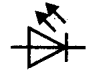
Light Emitting Diode (LED)
No filament inside
Two terminals:
Longer wire → Positive (+)
Shorter wire → Negative (-)
Glows only when connected correctly:
Positive terminal of
LED ↔ Positive of battery Negative terminal of
LED ↔ Negative of battery
→ Switches
Device to open/close a circuit
Controls flow of current
Examples: Safety pin experiment
Touches → circuit closed → lamp glows
No contact → circuit open → lamp off
→ Conductors and Insulators Conductors

Allow electric current to flow
Examples: Copper, Silver, Aluminium, Gold, Iron
Used in: Electrical wires, Connectors
Insulators
Do not allow electric current to flow
Examples: Plastic, Rubber, Wood, Glass
Used for: Wire coverings, Switch casings, Plug tops
Important for safety!
→ Types of Electricity
Direct Current (DC)
From batteries/cells
Flows in one direction
Powers small devices
Alternating Current (AC)
From wall sockets
Changes direction periodically
Powers large appliances
→ Safety Precautions
Never touch switches with wet hands
Never play with power supply
Use only batteries or cells for experiments
Human body conducts electricity → can be dangerous!
→ Uses of Electricity
At Home
Lighting (lamps, bulbs), Fans, Heaters, Television, Computer, Refrigerator, Washing machine
In School
Projectors, Computers, Lights, Fans, Laboratory equipment
In Neighbourhood/City
Street lights
Electric trains
Traffic signals
Water supply systems
Hospitals
Factories and industries
Entertainment
Radios, Music players, Video games, Movies, theatres
Communication
Mobile phones, Internet, Televisions
Transport
Electric cars, Metro trains, Electric buses
→ Suggested Grouping of Uses
Domestic, Educational, Industrial, Transportation, Communication, Entertainment, Healthcare
→ Symbols
Standardised by IEC, ANSI, IEEE
Circuit diagrams use symbols: