How does a mask really work? Class 9
R
RBSEGuide
How does a mask really work? Class 9
Ready to Go Beyond (Page 7)
Question 1.
How does a mask really work? Class 9
Answer:
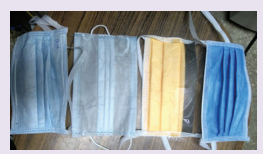
A mask works by blocking tiny particles (like virus droplets) from entering or leaving through the nose and mouth. Understanding this involves:
- Physics: Particles in air are constantly moving. Masks use electrostatic attraction - the fibres in the mask carry a charge that attracts and traps tiny particles, even ones smaller than the pore size.
- Chemistry: The fibres are made of polymers (like polypropylene). The chemical structure of these polymers makes them good at generating and holding static charge.
- Biology: Viruses like SARS-CoV-2 travel in tiny droplets. Their size (0.1 microns) determines what kind of filtration is needed to block them.
- Mathematics: Engineers model airflow and filtration efficiency - calculating what percentage of particles are blocked at different breathing speeds.
So, a simple-looking mask is actually a product of knowledge from physics, chemistry, biology, and mathematics working together.