In a forest, it was observed that one of the trees was severely debarked by an elephant. Class 9
In a forest, it was observed that one of the trees was severely debarked by an elephant. Class 9
Question 1.
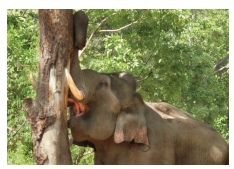
In a forest, it was observed that one of the trees was severely debarked by an elephant to meet its food requirements, as the bark is a rich source of nutrients (Fig.). Based on your learning, answer the following: Class 9
(i) Which function(s) of the tree is/are hampered by debarking?
Answer:
Debarking removes the bark which includes the epidermis and the phloem (outer bark). Functions hampered:
- Protection - the epidermis/bark protects the tree from mechanical injury, water loss, and entry of microorganisms. Without it, the tree is exposed to infections and drying.
- Food transport - the phloem present in the bark transports food from leaves to roots. Removal of bark interrupts phloem, so roots cannot receive food (sugars) from leaves, eventually killing the roots.
(ii) Which plant tissue would be affected by further damage to the tree trunk even after debarking?
Answer:
After debarking, further damage to the tree trunk would affect the xylem (wood). Xylem is located beneath the phloem/bark and forms the woody part of the trunk. Additionally, if the lateral meristem (cambium) is damaged, the tree would lose its ability to grow in girth and regenerate new xylem and phloem layers.
(iii) Which function of the tree would be hampered if the tissues beneath the bark were severely damaged?
Answer:
If the tissues beneath the bark (mainly xylem) were severely damaged, the transport of water and minerals from roots to leaves would be hampered. Without water and minerals reaching leaves, photosynthesis would fail, and the tree would eventually die.
(iv) What assumptions are you making to answer the questions above? How would the answer change if your assumptions are also changed?
Answer:
Assumption: The debarking is complete (removes all bark including phloem) and occurs around the entire circumference of the tree trunk (ring-barking). If the assumption changes - if only partial debarking occurred, leaving some phloem intact on one side - some food transport may continue, allowing the tree to partially survive longer. Similarly, if the lateral meristem (cambium) beneath the bark is intact, the tree may regenerate new bark over time.