Local Government in Rural Areas Class 6 Case Study Based Questions
Local Government in Rural Areas Class 6 Case Study Based Questions
Local Government in Rural Areas Class 6 Case Study Based Questions
Read the sources given below and answer the following questions:
I. Like every village in India, the people of Lakshmanpur have a system of local government called ‘Panchayat’, which refers to a village council. Panchayats bring governance closer to the people, making it possible for them to actively participate in decision-making processes.
Question 1.
What is the local government system in Lakshmanpur called?
Answer:
Panchayat.
Question 2.
What is the primary function of Panchayats?
Answer:
To bring governance closer to the people.
Question 3.
How do Panchayats facilitate community participation in governance?
Answer:
Panchayats facilitate community participation by allowing villagers to engage in decision-making processes. The people are made able to raise their voice and influence local governance. The Panchayats enhance account¬ability and responsiveness to community needs.
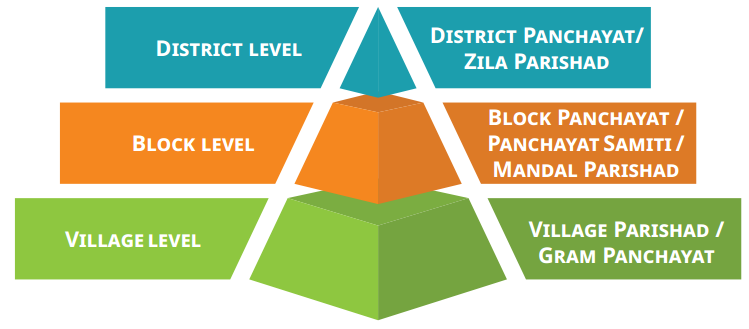
II. Similar institutions exist at the block level and the district level, which are above the village level. Their names are listed in the pyramidal diagram we saw in Fig. on textbook page 164. The Panchayat Samiti at the block level is the link between the Gram Panchayat and the Zila Parishad at the district level.
Question 1.
What is the role of the Panchayat Samiti?
Answer:
It acts as a link between the Gram Panchayat and the Zila Parishad.
Question 2.
At what levels do institutions similar to the Gram Panchayat exist?
Answer:
Block level and district level.
Question 3.
Why is the structure of Panchayati Raj important for local governance?
Answer:
The structure of Panchayati Raj is important as it ensures a systematic approach to governance. It facilitates coordination between different levels of local government. It enhance resource allocation, and promotes effective implementation of development projects.