Study the data given in the following table. What conclusions can you draw about the functioning Class 8
Study the data given in the following table. What conclusions can you draw about the functioning Class 8
Question 1.
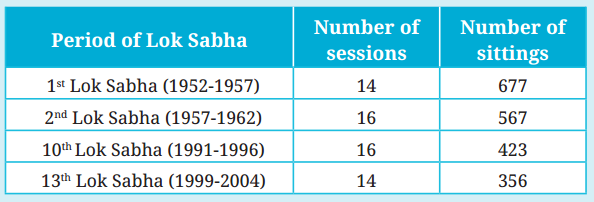
Study the data given in the following table. What conclusions can you draw about the functioning of Parliament over time? Compile data for more recent years.(Page 158) Class 8
Answer:
The data shows a steady decline in the number of Lok Sabha sittings over time. While the number of sessions has remained fairly consistent, the 1st Lok Sabha had 677 sittings, which dropped to 567 in the 2nd, 423 in the 10th, and just 356 in the 13th. This suggests that Parliament now spends less time on debates and discussions than in earlier years, which may affect the quality of legislative work.
| Lok Sabha Term | Sessions hold | Total Sitting Days | Remarks |
| 16th Lok Sabha (2014-2019) | 18 | 315 | This term saw more working days and regular discussions. It reflected relatively higher parliamentary productivity. |
| 17th Lok Sabha (2019 - 2024) | 16 | 274 | There was a decline in the number of things compared to the previous term. Reasons may include disruptions, the COVID-19 pandemic, and early adjournments. |
Question 2.
Read the following statement of the former chairman of the Rajya Sabha, M. Venkaiah Naidu given in 2021: "...the productivity of Rajya Sabha during 200414 has been about 78 % and it declined to about 65 % since then. Of the 11 sessions [that he presided over], four of them clocked low productivity of 6.80%, 27.30%, 28.90%, and 29.55%; during the year 2018, the Rajya Sabha recorded the lowest ever productivity of 35.75 % under the impact of disruptions." What conclusions can you draw from this statement? What implications does this have for the role that the Rajya Sabha is expected to play? Class 8
Answer:
M. Venkaiah Naidu's statement highlights a steady decline in the productivity of the Rajya Sabha. From 2004 to 2014, it averaged 78%, but since then, it has dropped to around 65%. Some sessions had productivity as low as 6.80%, with 2018 reaching a record low of just 35.75%, mainly due to disruptions.
This gradual decline shows that the Rajya Sabha is struggling to fulfill its role of debating and reviewing laws properly. Frequent disruptions prevent meaningful discussions, making it harder to hold the government accountable and damaging public trust. To improve, reforms are needed to reduce these disruptions and boost productivity.
The Rajya Sabha reflects interests and upholds the spirit of federalism.
It plays a crucial role in India's democracy by effectively raising the quality of debates. The decline in productivity affects this role in several key ways:
Less functioning time reduces the scope for regional voices to be heard in national policymaking.
Poor productivity means laws may pass without adequate debate, weakening the protection of the people's interests.
Frequent disruptions can lead to a loss of public confidence in the institution's effectiveness. A weak and ineffective Rajya Sabha is not good for a healthy democracy.