The following table contains information about the number of dengue cases reported in a hospital Class 8
hardThe following table contains information about the number of dengue cases reported in a hospital Class 8
The following table contains information about the number of dengue cases reported in a hospital over a period of one year: Class 8
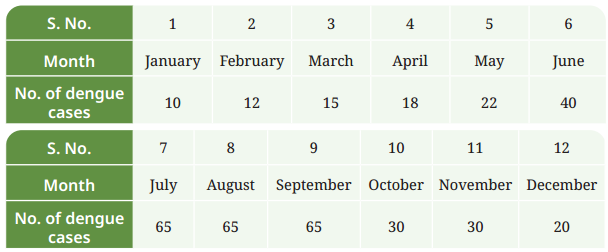
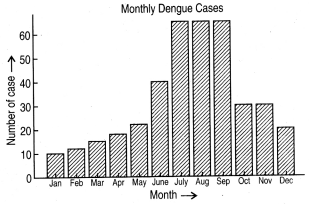
Make a bar graph of the number of cases on the Y-axis and the month on the X-axis. Critically analyse your findings and answer the following:
(i) In which three months were the dengue cases highest?
Answer:
The three months with the highest number of dengue cases are:
- July: 65 cases
- August: 65 cases
- September: 65 cases
(ii) In which month(s) were the cases lowest?
Answer:
The lowest number of dengue cases was reported in January (only 10 cases). However, in February (12 cases) and March (15 cases) are also low, but January is the lowest.
(iii) What natural or environmental factors during the peak months might contribute to the increase in dengue cases?
Answer:
Monsoon (rainy) season: July, August, and September, stagnant water, warm and humid weather, standing water in flower pots, coolers, tires, and containers, and garbage dumps at open places.
(iv) Suggest a few preventive steps that the community or government can take before the peak season to reduce the spread of dengue.
Answer:
Preventive steps:
- Clean water tanks and cover them properly.
- Remove stagnant water from pots, tyres, and coolers.
- Keep drains and surroundings clean.
- Spray mosquito repellents in streets and houses.
- Use mosquito nets and screens on windows.
- Distribute mosquito repellent creams, especially in high-risk areas.
- Run health campaigns in schools and villages.
- Teach people how dengue spreads and how to prevent it.
- Put up posters and use loudspeakers for reminders.
- Train doctors and nurses to handle dengue cases.
- Keep hospitals ready with testing kits and beds.
- Set up help centres for quick support.