Geographical Diversity of India Class 7 Notes
hardGeographical Diversity of India Class 7 Notes
Geographical Diversity of India Class 7 Notes
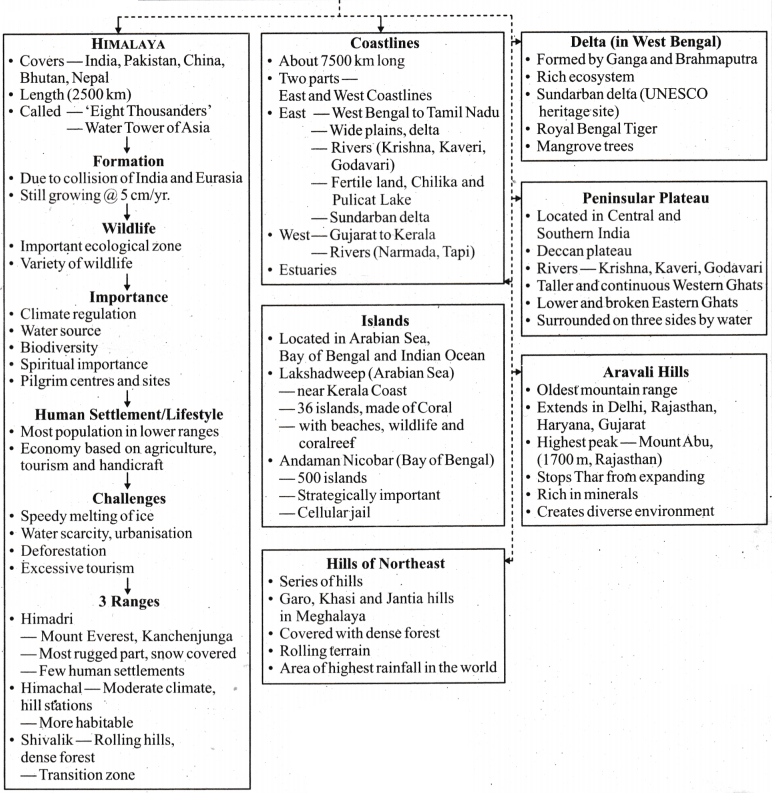
1. Geographical Diversity: The variety of physical features, climates, and ecosystems found in a specific region, in this case, India.
2. Himalayas: A major mountain range in Asia, separating the plains of the Indian subcontinent from the Tibetan Plateau. It is the highest mountain range in the world.
3. Peninsula: A piece of land that is surrounded by water on three sides. India is referred to as a peninsula because it is surrounded by the Arabian Sea, Bay of Bengal, and Indian Ocean.
4. Plateau: A flat, elevated area of land that rises sharply above the surrounding area. The Peninsular Plateau is a significant geographical feature of India.
5. Western Ghats: A mountain range that runs along the western coast of India, known for its rich biodiversity and numerous waterfalls. It is also a UNESCO World Heritage Site.
6. Eastern Ghats: A range of low hills running parallel to the eastern coast of India, which are less continuous than the Western Ghats.
7. Deccan Plateau: A large plateau in southern India, bordered by the Western and Eastern Ghats, characterised by its flat terrain and rich agricultural land.
8. Rivers: Water bodies that flow towards oceans, seas, or lakes. Major rivers in India include the Ganga, Brahmaputra, Godavari, Krishna, and Kaveri, which are vital for irrigation and drinking water.
9. UNESCO World Heritage Site: A landmark or area recognised by the United Nations Educational, Scientific and Cultural Organisation for its cultural, historical, scientific, or other forms of significance.
10. Sundarbans: A vast delta region formed by the confluence of the Ganga, Brahmaputra, and Meghna rivers, known for its mangrove forests and biodiversity, including the Royal Bengal Tiger.
11. Barren Island: The only active volcano in India, located in the Andaman and Nicobar Islands, known for its volcanic activity.
12. Mawlynnong Village: A village in Meghalaya known as the 'cleanest village in Asia,' famous for its eco-friendly practices and living root bridges.
13. Flora and Fauna: The plant (flora) and animal (fauna) life of a particular region. India's diverse geography supports a wide variety of flora and fauna.
14. Delta: A landform that forms at the mouth of a river, where it meets a body of water, characterised by sediment deposition. The Sundarbans is an example of a delta.
15. Asian continent, 7th largest (Area)
16. Indian subcontinent - India, Nepal, Pakistan, Bangladesh
17. 5 geographical regions - Great mountains, Northern plains, Desert, Peninsula, Islands